Free Printable Jigsaw Puzzles For Kids
Create printable Jigsaw puzzles for kids. This free Jigsaw puzzles maker helps you design and download printable puzzles for your kids.
Choose a picture, select number of pieces, style of lines, and create a printable Jigsaw puzzle. Want more cutting styles or the option to upload your own photo? Try this Custom Printable Jigsaw Puzzle Maker.
Your printable Jigsaw puzzle
Print the page on A4 (Letter) or A3 (Tabloid) paper, cut along the white guide lines, mix the pieces, and assemble the image again.
Create Printable Jigsaw Puzzles for Kids
When my children were little, Jigsaw puzzles were a favorite—until they'd solved ours a hundred times and grew bored. I kept hunting for an easy way to make new ones, with no luck. The catch is that every child is different: little ones need a few big pieces, while older kids want something far trickier. Cutting complex Jigsaw shapes by hand is a nightmare, too.
That's exactly why I created this Free Printable Jigsaw Puzzle Maker. Choose a picture from the gallery, pick the number of pieces to match your child's age, select a cutting line style, and download free printable Jigsaw puzzles in PDF.
Jigsaw puzzles for kids are a calm, screen-free activity that toddlers, preschoolers, and older children all love, and you do not need to install anything or buy a single piece of cardboard.
In this guide you will learn how the Jigsaw Puzzle Maker works, how many pieces to choose for each age, and how to get the best results when printing and cutting at home, in the classroom, or for a party.
What Are Free Printable Jigsaw Puzzles in PDF
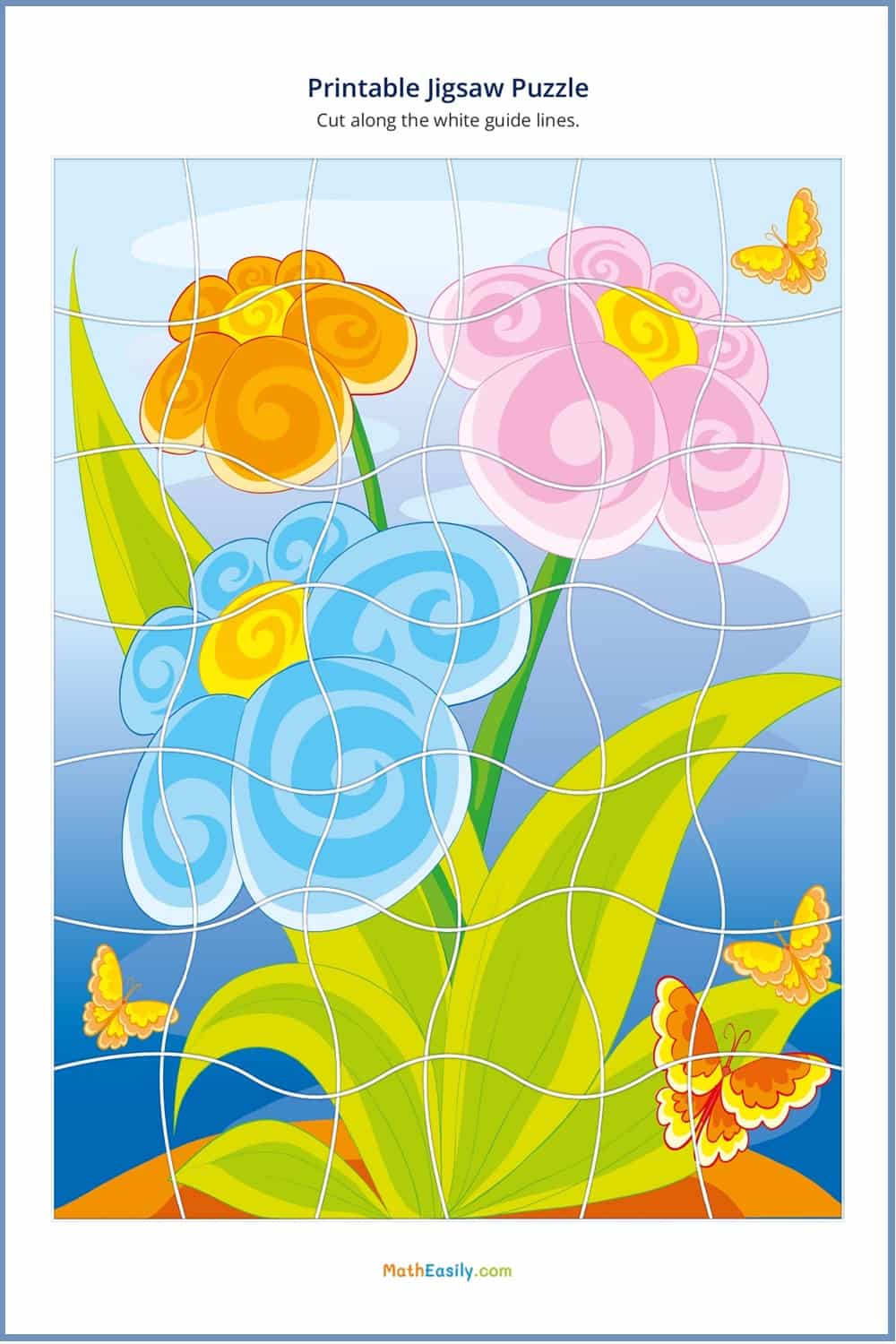
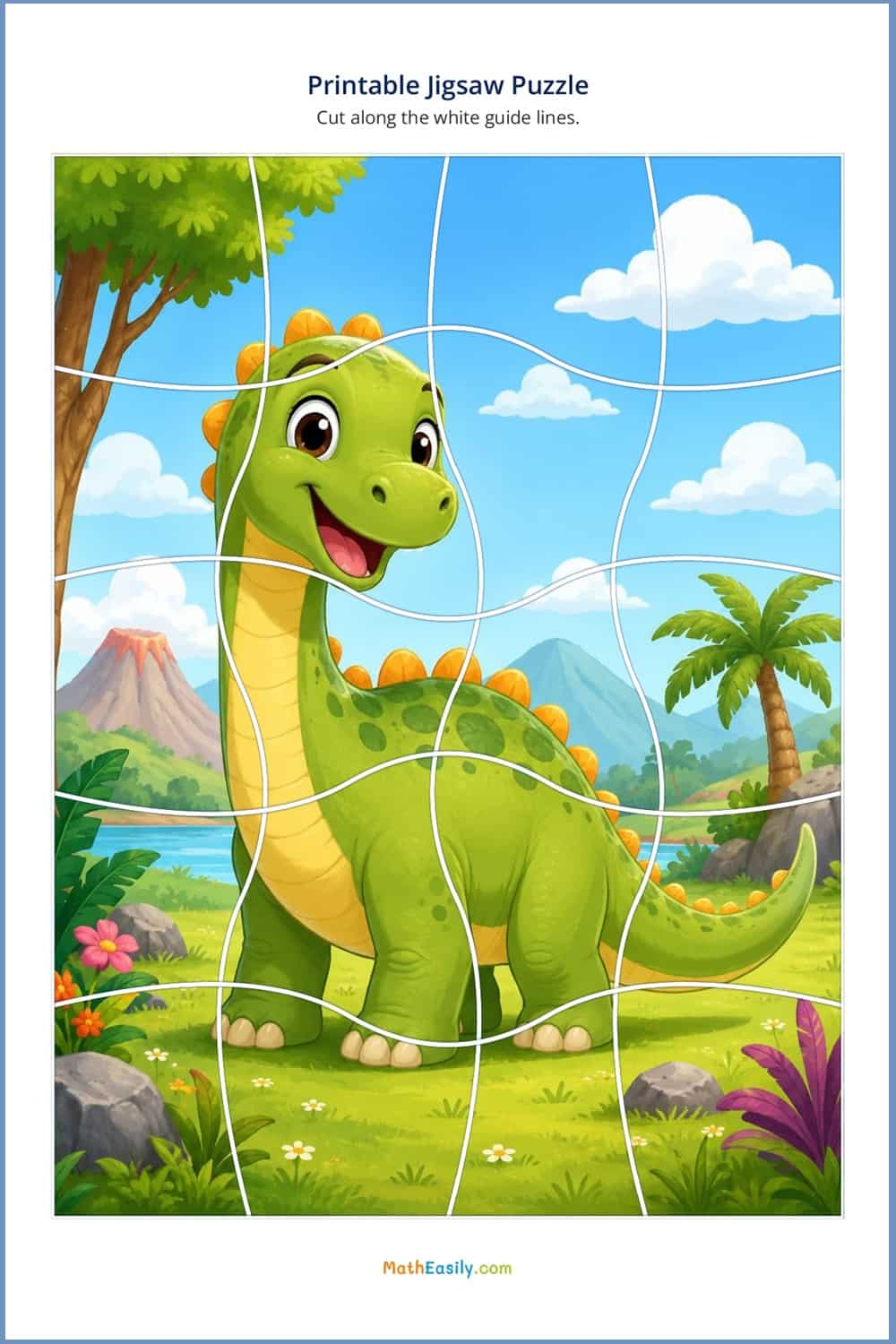
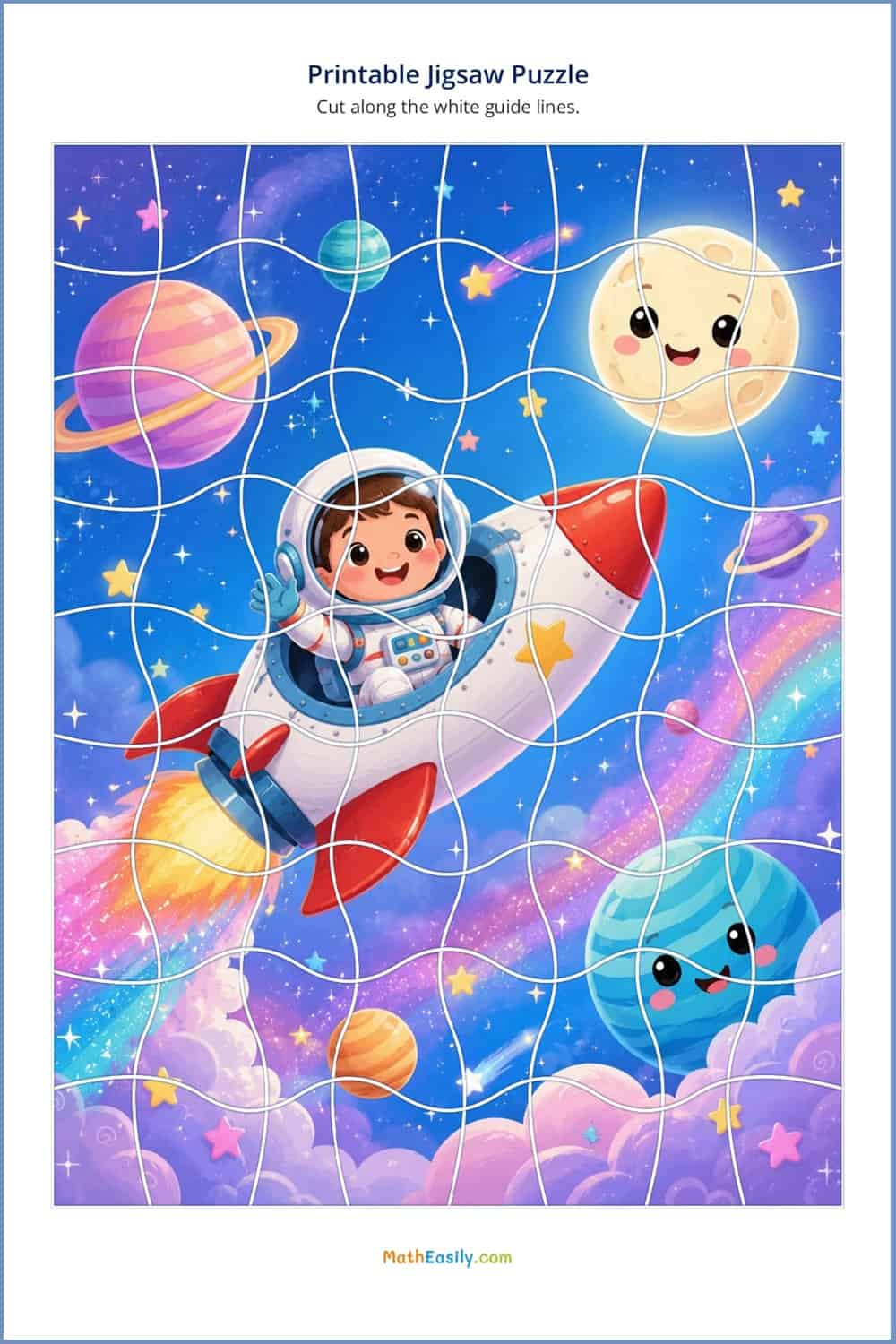
Printable Jigsaw puzzles are picture puzzles you create on paper instead of buying them in a box. You print a picture with cutting lines printed on top of it, cut along the lines, mix up the pieces, and put the image back together, just like a classic Jigsaw.
Store-bought Jigsaw puzzles use thick cardboard with complicated interlocking shapes that are almost impossible to cut by hand. Our free printable Jigsaw puzzles for kids use simpler guide lines instead. They still feel like a real jigsaw, but they are far easier (and safer) for children to cut with kid-friendly scissors.
Why Printable Jigsaw Puzzles Are Great for Kids
Jigsaw puzzles do more than fill a rainy afternoon. These cut and paste printables help kids to develop many essential skills. As children match shapes and colors, they quietly build a whole set of abilities:
- Problem-solving & logic: figuring out which piece goes where is a small, satisfying puzzle for the brain.
- Fine motor skills: picking up, turning, and placing pieces strengthens little fingers, and cutting along the lines is great scissor practice.
- Patience & focus: finishing a puzzle teaches kids to stick with a task and enjoy the reward.
- Geometry & color recognition: perfect for toddlers and preschoolers who are still learning to sort and match.
- Screen-free calm: a quiet, hands-on break from tablets and TV.
How to Create Free Printable Jigsaw Puzzles for Kids
The free printable Jigsaw puzzle maker is designed to be simple enough to use in a couple of minutes. Here is the whole process:
- Choose a picture. Pick an image from the gallery or upload your child's favorite photo. Simple, colorful pictures work best, because the pieces are easier to recognize after cutting.
- Select the number of pieces. Match the difficulty to your child's age (see the age guide below).
- Choose the line style. Straight lines are easiest to cut; wavy or curved lines feel more like a real jigsaw.
- Adjust the line thickness. A clear, bold line is easier for kids to follow. The default 2px works well for most printers.
- Print or save as PDF. Use the same paper size in your printer settings as you chose in the maker. Watch the tutorial on YouTube here.
- Cut, mix, and build. Cut along the guide lines (with a grown-up's help for younger children), shuffle the pieces, and put the picture back together.
How Many Jigsaw Puzzle Pieces by Age?
The number of pieces changes the whole feeling of the puzzle. Fewer pieces are quick and easy for little ones; more pieces give older kids a real challenge. Use this simple age guide to choose:
| Pieces | Best for |
|---|---|
| 12 pieces | Toddlers & preschoolers (ages 2–4). Big pieces for small hands. |
| 20 pieces | Younger school-age kids (ages 4–6). A fun everyday puzzle. |
| 30 pieces | Kids who have done a few puzzles (ages 6–8). |
| 42 pieces | Older kids who enjoy matching details (ages 8–10). |
| 56 pieces | Confident young puzzlers on larger paper (ages 9–11). |
| 72 pieces | The biggest challenge, best on A3/Tabloid (ages 10+). |
For most home printers, start with 12 or 20 pieces for younger children and 30 pieces for older kids. The pieces stay comfortable to cut, and the finished puzzle feels exciting without taking too long to prepare.
Line Style and Thickness: Small Settings, Big Difference
The cutting lines matter more than you might expect. If the lines are too thin, they can fade out on some printers and kids lose track of where to cut. If they are too thick, they cover too much of the picture. A range from 1 px to 5 px gives you control:
- 1 px: a very light guide line for older kids.
- 2 px (default): a good balance for most pictures and printers.
- 3 px or more: bolder lines that younger children and groups can follow easily.
The line style changes how easy the puzzle is to cut, too. Straight lines are easiest—great for kids learning scissors. Soft wavy lines are a little more playful. Large curved lines are the closest to a real jigsaw shape while still being manageable.
Printing and Cutting Tips for the Best Results
- Use slightly thicker paper if you have it. Regular printer paper works fine, but heavier paper holds up better in little hands.
- Check the page fit first. Match the paper size in your printer settings (A4/US Letter, or A3/US Tabloid) to what you selected in the maker.
- Cut slowly along the lines. Edges do not need to be perfect—the charm is that it is simple and ready whenever your child wants to play.
- Store and reuse. Keep the pieces in a small envelope or zip bag. Kids love decorating the envelope and writing the puzzle name on it themselves.
Safety note: always supervise younger children with scissors, or let a grown-up do the cutting while the child mixes and builds the puzzle.
Fun Ways to Use Printable Jigsaw Puzzles
Because they are quick to prepare and easy to store, printable puzzles fit into all kinds of moments:
- Classroom centers: print the same puzzle several times so a whole group can play.
- Road trips & flights: prep a few puzzles in envelopes for quiet travel time.
- Birthday parties & playdates: pick different pictures with similar difficulty so everyone gets a fair challenge.
- Rainy days at home: a calm, screen-free activity that is always ready.
Frequently Asked Questions
Are these printable jigsaw puzzles really free?
Yes. The puzzle maker is completely free to use. You can create, print, and save as many puzzles as you like with no sign-up required.
Can I save the printable jigsaw puzzle as a PDF?
Yes. After making the puzzle, use your browser's print option and choose "Save as PDF" instead of a printer. This lets you keep the puzzle and print it again later—handy for a whole classroom or party.
How many pieces should I choose for my child?
Start with 12 pieces for toddlers and preschoolers, 20 pieces for a fun everyday puzzle, or 30 pieces and up when an older child wants more of a challenge.
What age are these printable jigsaw puzzles for?
They suit a wide range of ages. Toddlers can enjoy a 12-piece puzzle with a little help, while older kids can take on 30, 56, or even 72 pieces. Just match the number of pieces to your child's age and skill.
Are these the same as classic cardboard jigsaw puzzles?
No. Classic jigsaw puzzles have interlocking cardboard pieces that are hard to cut by hand. These printable puzzles use simpler cutting lines, so they are much easier and safer to prepare at home.
What paper size should I use?
A4 or US Letter is best for everyday printing. A3 or US Tabloid works better for larger puzzles with more pieces, such as 56 or 72 pieces, for older children.
Ready to start? Try the free printable jigsaw puzzle maker and create the first puzzle for your kids in under a minute.