Battleship Math Coordinate Games
Our math battleship games cover various math practice:
addition,
multiplication, and even linear equations—you keep the same rules and simply change the type of problem you solve.
How to Play the Online Battleship Math Game
Here’s the quick loop kids learn in under a minute (and then they don’t want to stop):
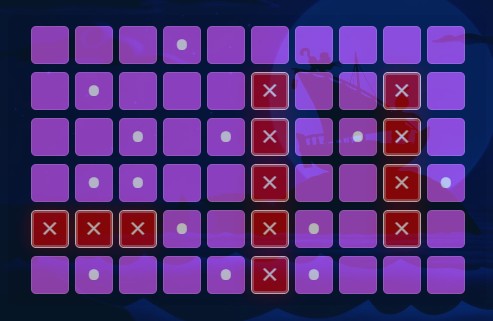
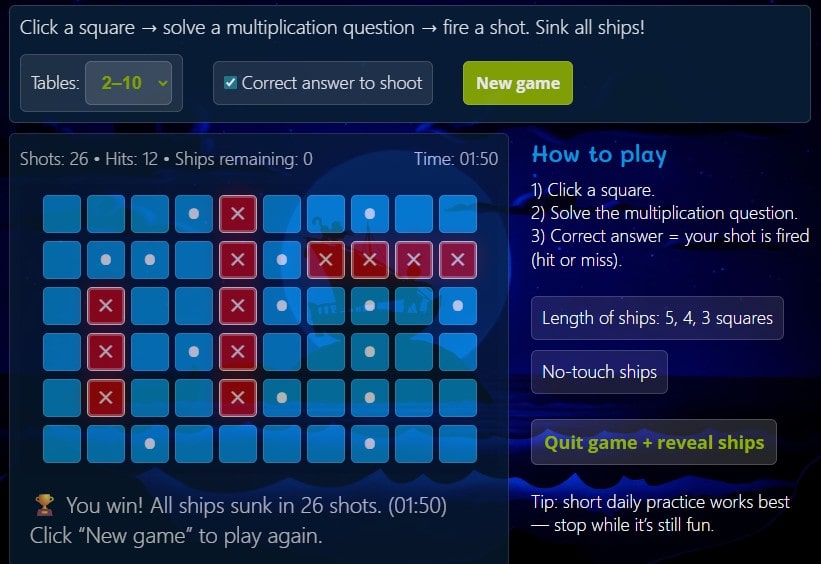
- Click a square on the grid.
- Solve the math question that pops up (example: 3 × 7).
- Correct answer = shot fired (you’ll see a hit or miss right away).
A few details about these math battles:
- Ship lengths: 5, 4, and 3 squares
- No-touch ships: ships don’t touch (even diagonally), which makes strategy matter
- Timer + shots: kids naturally try to beat their own score
- Tip I agree with: short daily play works best—stop while it’s still fun
If you want a clear, kid-friendly explanation before playing, I recorded this video
how I play a math battleship.
Watch it once, then jump right into the game while the idea is fresh.
Free Printable Battleship Game Rules
What is Printable Battleship Game
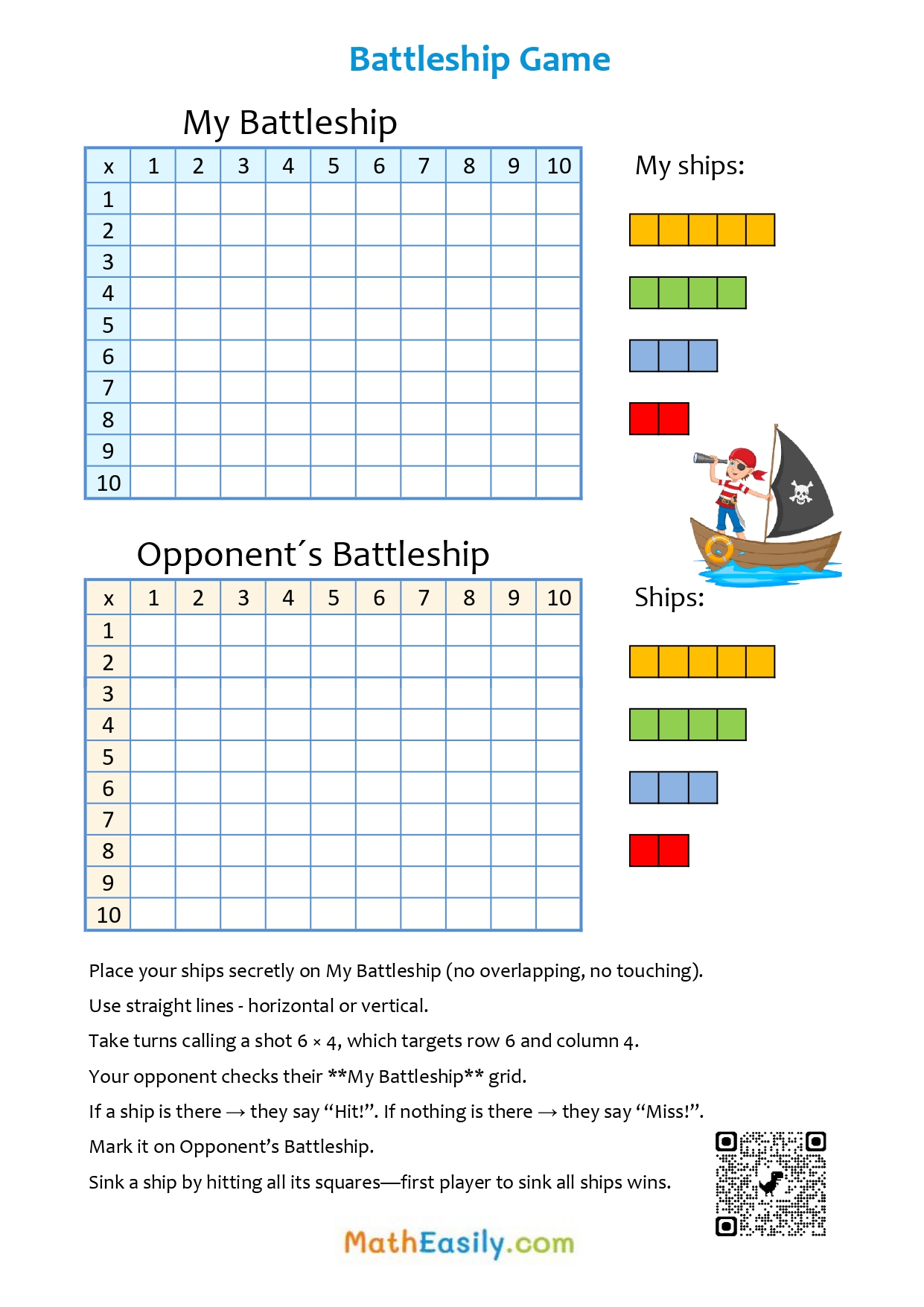
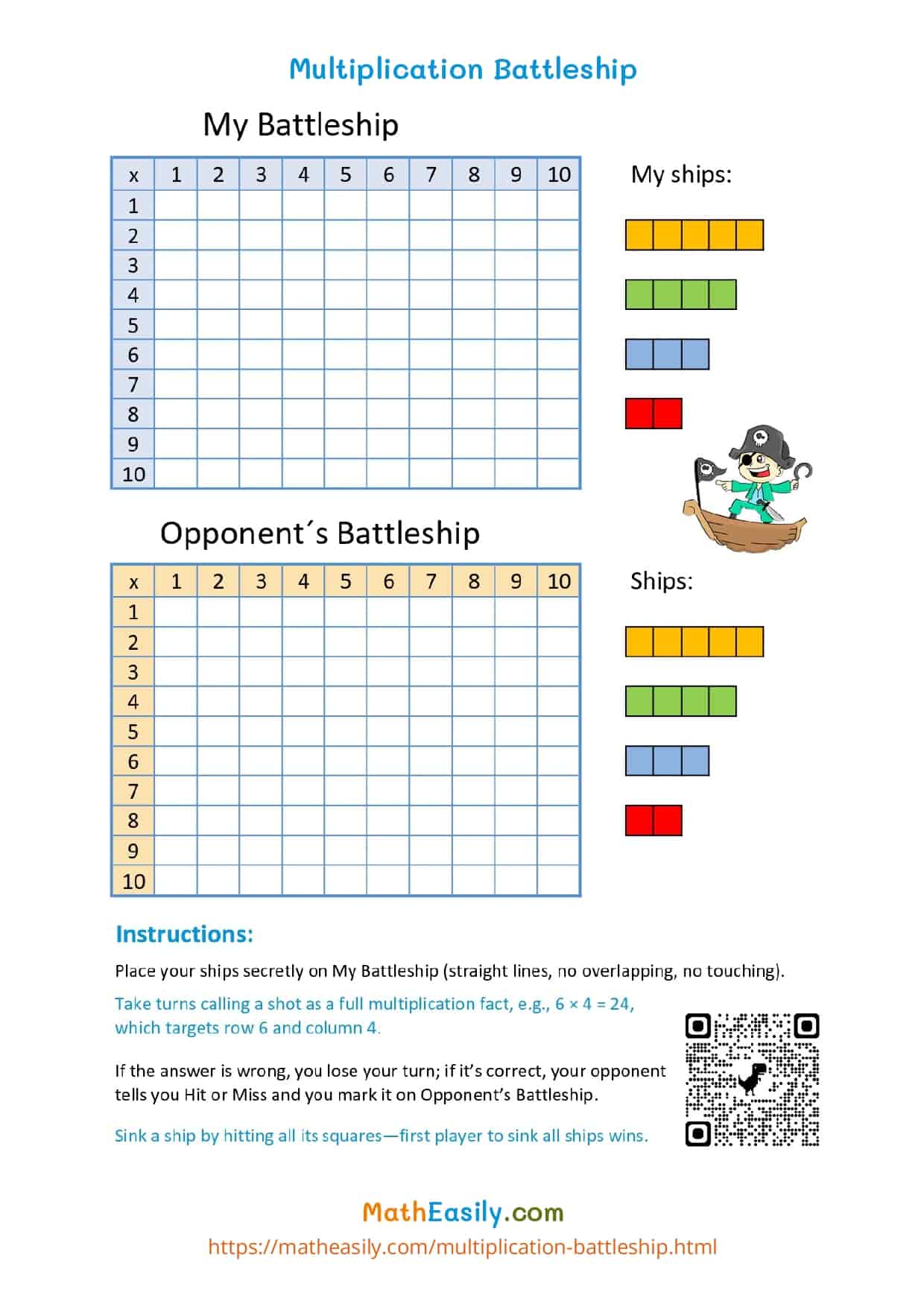
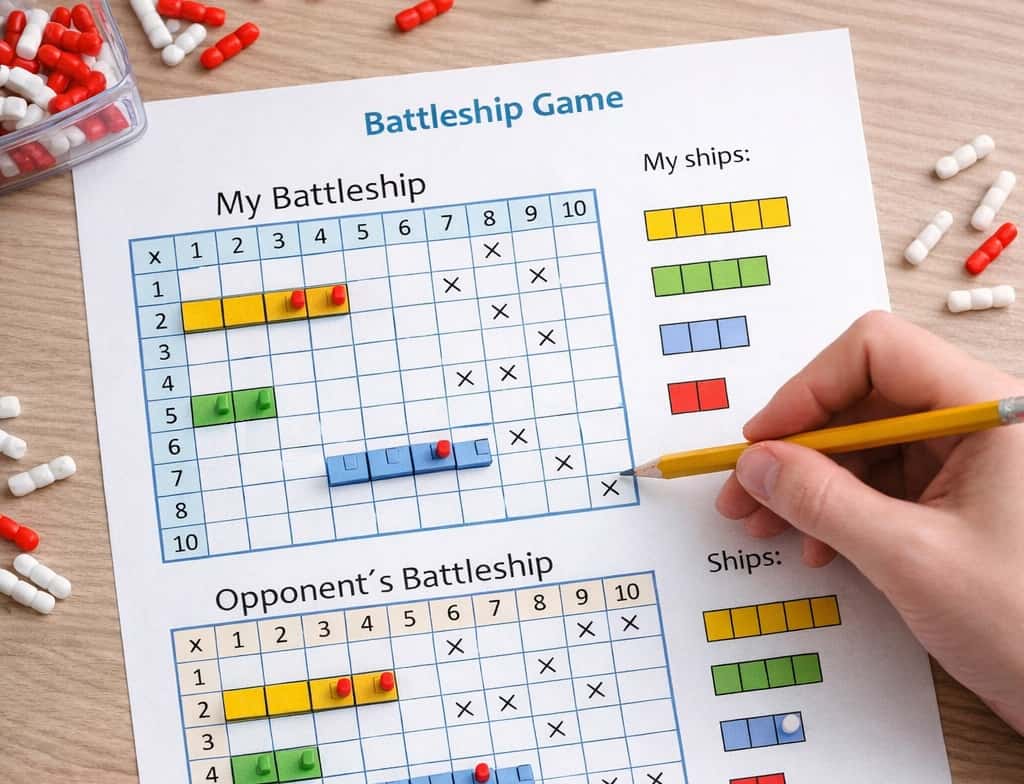
Printable Math Battleship coordinate game is a two-player game where each player secretly places ships on a grid, and the opponent tries to find (and sink) them by making guesses. Each player uses a page with two grids plus recording spaces to mark chosen coordinates and show their math work. The winner is the first to sink all of the other player’s ships by guessing correctly and solving each problem.
Printable math battleship game is a math board game where the magic happens for partner work, math centers, or
holiday math practice.
Use these simple battleship game rules for 2 players:
Setup Battleship Games rules
- Place (color) ships secretly on My Battleship.
- Ships go in straight lines: horizontal or vertical only.
- No overlapping and no touching (even corner-to-corner).
- Use the ship lengths provided on the page (5, 4, 3, 2).
- Flip a coin or choose a player to go first.
Math battleship game: how to play
- On your turn, pick a coordinate by saying a math fact with the answer, for example:
“6 × 4 = 24”.
- That means you are shooting at **row 6, column 4** on your opponent’s grid (**Opponent’s Battleship**).
- Your opponent quickly checks your answer:
- If the answer is wrong: the shot does not count → mark nothing and your turn ends.
- If the answer is correct: the shot counts → check that coordinate for Hit/Miss.
- Your opponent checks their **My Battleship** grid.
- If a ship is there → they say **“Hit!”.
- If nothing is there → they say **“Miss!”.
- Mark the result on your **Opponent’s Battleship** grid (e.g., X for miss, ● for hit).
Teacher tip: If arguments happen (“That was a hit!”), make it a habit that the defender answers in a calm script: “Hit” / “Miss” only—no extra commentary.
Winning the battleship
You sink a ship by hitting every square of it. First player to sink all ships wins.
Why Battleship Math Games Work So Well for Fluency
This isn’t just “fun.” It’s also aligned with how learning sticks.
When kids answer a question to earn a shot, they’re doing retrieval practice—pulling facts from memory. And when you play for a few minutes across several days, you’re adding spaced practice. Together, these help facts stick longer and feel easier to recall.
Also, fluency isn’t just speed. It’s accuracy, efficiency, and flexibility with strategies.
Math Battleship nudges kids to get accurate and keep going—without the heavy feel of “a drill.”
The “shoot” is the reward, so kids stay engaged even when the math gets more challenging.
Useful math games as battleships
One reason I call Battleship “sneaky learning” is that it builds the kind of quick math kids use all the time:
- Cooking: doubling a recipe, splitting servings, adding ingredients
- Shopping: “If each notebook is $3, how much for 4?”
- Sports and hobbies: scores, time, repeats, patterns
- Real routines: “We leave in 15 minutes—what time is that?”
When kids feel math is useful, their confidence rises—especially the ones who secretly believe they’re “not math kids.”